Wednesday, October 17, 2012

Bio archaeological Work at Marcajirca and Lab 2012

Our Lab in Huari House

Excavations in Structure 10

Working inside a Chullpa
More lab in the site


Excavation in structure 10


Getting ready to start working


Setting up archaeological excavations

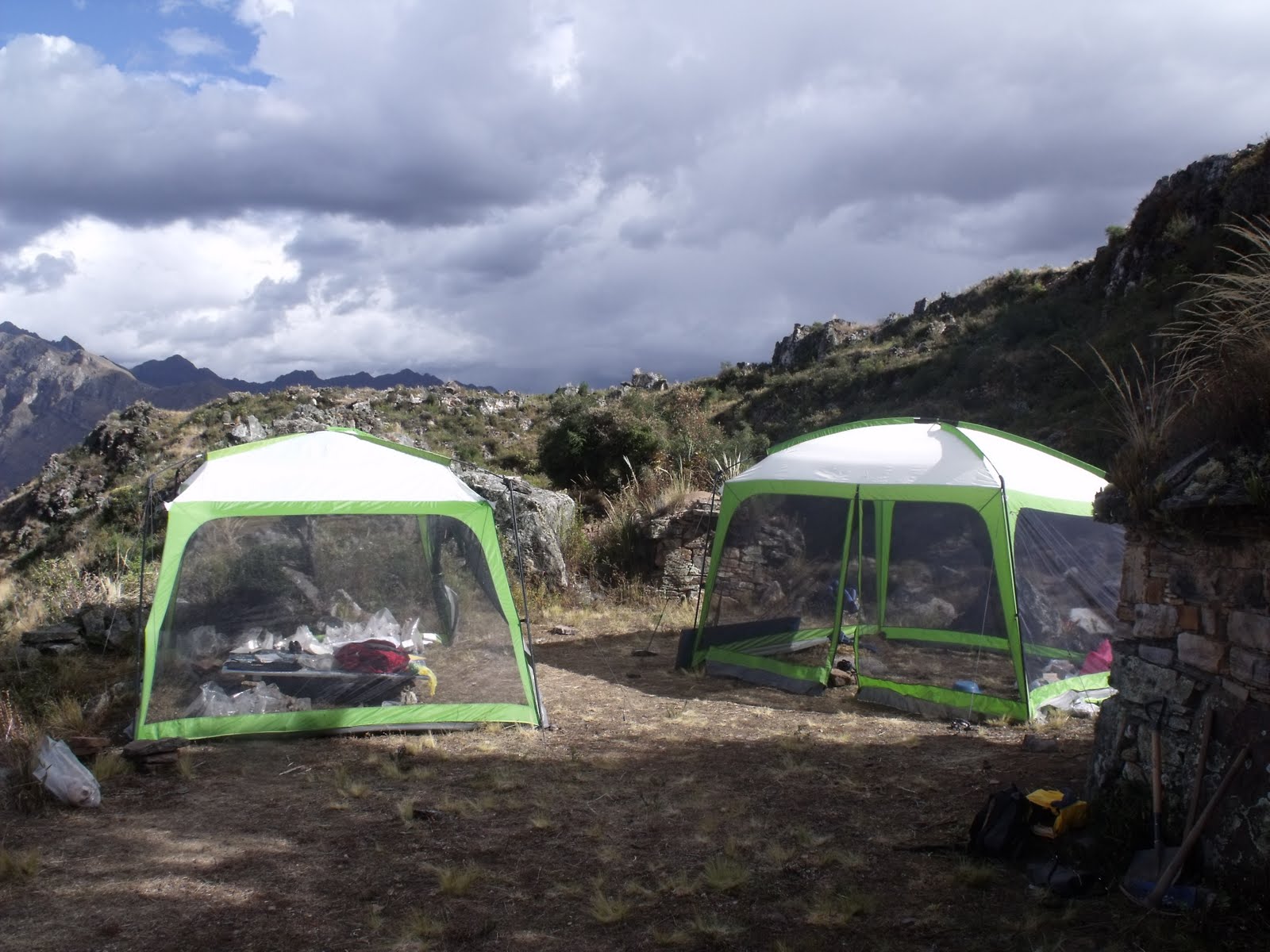
Our labs at the site
Ashley Remi working on her teeth project

Trying to organize bones of one skeleton

Using projector  makes our class more didactic 

Osteological class in our Lab

Random photos Marcajirca 2012

Team 2012: First lane, Aliz Ibarra, Valda Black, Samantha Linninger, Sarah Herrera, Karina Coscuna, Madeleine Schwarz, Amy Beresheim, Kirstie Bilbrey, Beau Murphy, Daniel Van Egmond. Second Line: Kriselda Nuñez, Bronwyn McNeil, Maggie Hall, Madeline Zhu, Ashley Remi, Rebecca Stetson, Sarah Mathena, Amelia Dial, Pablo Mateos, Thirth Lane: Bebel Ibarra, Anne Titelbaum, Jhon Cruz, Oscar Loyola, Jane Gatewood and Stephan Naji.
 1. There was a spider in the excavation this size.... 2,. It was a spider like this... 3. I saw spider like this size.. 
 Hiking to the Cross, around 4,400 m (14400 ft) above sea level
I think I will have neck pain tonight

I herd we have bone soup for Lunch, me too, just smile and lets clean well the bones


Doña Teofila doing dishes and enjoying the view

Resting after arrive to the Cross

Alone in the Chullpa... at least you have a spider as company

Cookie Break at Front Chullpa 13

I am still trying to figure out what Maggie is try to say

Taking notes in Chullpa 14

Monday, September 12, 2011

Bioarchaeological Work In Marcajirca 2011


First group 2011 in Marcajirca: Omar Alejos, Alejandra Contreras, Sammanta Linninger, Dr. John Verano, Jasmine Cloven, Mellisa Lund, Grace Warren, Amelia Hessey, Kristen Glass, Emily McDaniels, Sammantha Holder, Katia Valladares, Kathryn Mortesen, Leslie Corona and Rachael Porter

Second Group 2012 in Marcajirca: Mellisa Lund, José Sanchez, Emily McDaniels, Bebel Ibarra, Rosemary Pinales, Chritopher Rinker, Oscar Loyola, Carlos Escobar y Fernando Gutierrez (up)
Reona Oda, Magdalena Auron, Karine Andreassen, Kelsey Hack and Michaela Reizenger (down)


 Lecture in Huari House by Dr. Verano, Department of Anthropology of Tulane University, during his visit to our field school in 2011


Excavations in tombs are usulaly in small spaces
 Excavation in tombs involve work in many positions and closed spaces

Verifying Bone Inventory under Oscar's supervision


Analyzing and making inventory of the material beside chullpas
Mellisa supervising bone inventory in Marcajirca Lab

Working in Marcajirca lab students rotate: maximum 3 students at a time in order to give a quality teaching
Bone Inventory Form to be filled out

Drawing recording bone distribution in tombs

Sunday, September 11, 2011

Archaeology Work 2011

Archaeology Team In Huamparan. Up: Parag, Lea and Hugo, sitting upper row: Fred and Linn, Francesca, Christopher, Carlotta and Lindsey. Lower row: Carlos, Jhon, Bebel and Fernando
Excavations in Marcajirca-behind a tomb
Excavation in Marcajirca to determin occupation before the tomb was built


Excavations in Marcajirca - usually in open spaces

Excavation in "area" in Huamparán- we work with several units positioned next to each other
Recordering architecture in Huamparan

Drawing architecture


Excavating to identify reoccupation or re-use of walls

Excavating a possible intrusive tomb in the main structure

Archaeological drawing which is afterwards passed to autocad program

Thursday, April 07, 2011

AAPA Meeting 2011

The project is presenting a poster in the American Association of Physical Anthropology meeting 2011 , we are showing the results of season 2009.


Marcajirca

Is located in the region of Ancash, a province of Huari, approximately 500 km North East of Lima, 3800 MASL and belongs to the Late Intermediate Period. This time in chronology of Peruvian archaeology correlates to 1200-1500 A.D.

This site is about 40 hectares in size, and it is situated at the top of the mountain with a very difficult access to it. Apparently the choice of such location had defensive reasons; there are walls on both extremities of the site - North and South.

The research of the last years shows us the existence of several sectors such as (1)Public- there is an amphitheatre where the population must have had meetings, (2) Residential – which is located in the southern part of the site and so far we have identified 57 ‘houses’, most of them of circular shape. Excavations in these ‘houses’ unveiled evidence of fire, domestic vessels, burned animal bone and some seeds.

However the (3) Funeral sector is the most impressive one. There are 35 chullpas or tombs, and about 23 funeral caves with human remains inside most, although all the remains, whether in chullpas or caves, have been disturbed.

Besides the chullpas and the funeral caves there one more kind of burial which we call an underground burial and it is this type of burial that we are presenting here (AAPA). Underground burials are not very common in the region of Ancash. Nor they are common during the Late Intermediate. Recuay (200-600 A.D.) culture used to bury their dead in a sort of underground tomb, but such tomb had walls which would give shape to the tomb. In Marcajirca’s case excavation shows us that people were simply digging out a hole without making walls and after laying the dead body in and then covering it with dirt.

People being buried underground in a site where chullpas and caves were always open call our attention. Neither chullpas nor caves dominating the site were ever fully sealed as such was the funerary custom of old huarinos and this custom was being practiced in a bigger part of Northern and Central Peru.

Why would people be buried underground having many tombs around? We think that during colonial time (c XVII) the Spanish church prohibited the natives to bury their dead in any archaeological sites following the old custom, and forced they bury the dead according to the tradition of Catholic Church. To old huarinos Marcajirca was a sacred place, a place where their ancestors were still “living” and in order to keep them “living” those alive had to later be buried with the ancestors. Apparently huarinos during colonial time did not obey the Church and kept secretly burying their dead in archaeological sites, and in order to hide the dead and not be punished by the Church they buried underground.

The remains of one individual buried underground date to 1610 A.D. which would mean that the Spanish were already in the area for at least 80 years

Friday, September 24, 2010

Fieldwork Marcajirca 2010

Inside a chulpa before we enter it


Drawing before the actual recovery of bones from the cave or chulpa


Nicole doing inventory


Briana drawing bones


"Tools" of every bioarchaeologist while in Marcajirca


Field lab


Is that Stephanie in the chulpa?


Marie-Line really perfected that 1x1.5m


Yet she says it is still not perfect


Roc busy with paperwork


Tired of bones Dawn?


Inside a chulpa


Always chatting